SERIES: Engagement in Action
MINI CASE STUDY
From Flat LMS Pages to Interactive Moments
Actionable Insights
Improving learning experiences is rarely an all-or-nothing endeavour. There are often small investments that can make significant impacts. Focus on concepts that would particularly benefit from a showing rather than a telling approach.
Year 2021
Industry Higher Education
Audience Continuing Ed Students
Components LMS course with Storyline elements
Theme(s) stretching resources; increasing engagement
Challenge
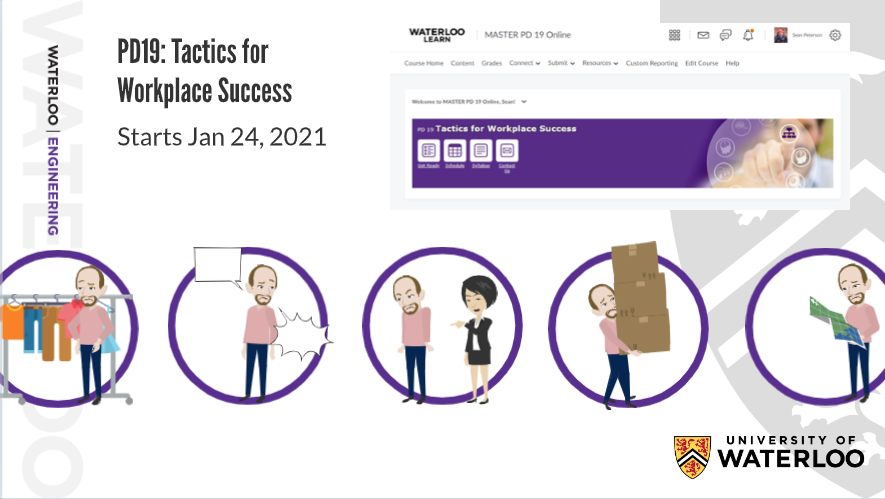
I was asked to repurpose an academic, professional development course for co-op students, turning it into something that could be offered to external groups. The content covering intercultural skills was good, but consisted, at that time, entirely of long pages of static text in an LMS.
Approach
We didn’t have the budget to rebuild the full course as an eLearning module. Instead, I strategically embedded small, high-impact Storyline interactions into key sections.
Result
These micro-interactions transformed dense content into moments of reflection, practice, or emotional connection. It was proof that even a few well-placed moments can wake up a flat course.

Rude or Not Rude Activity
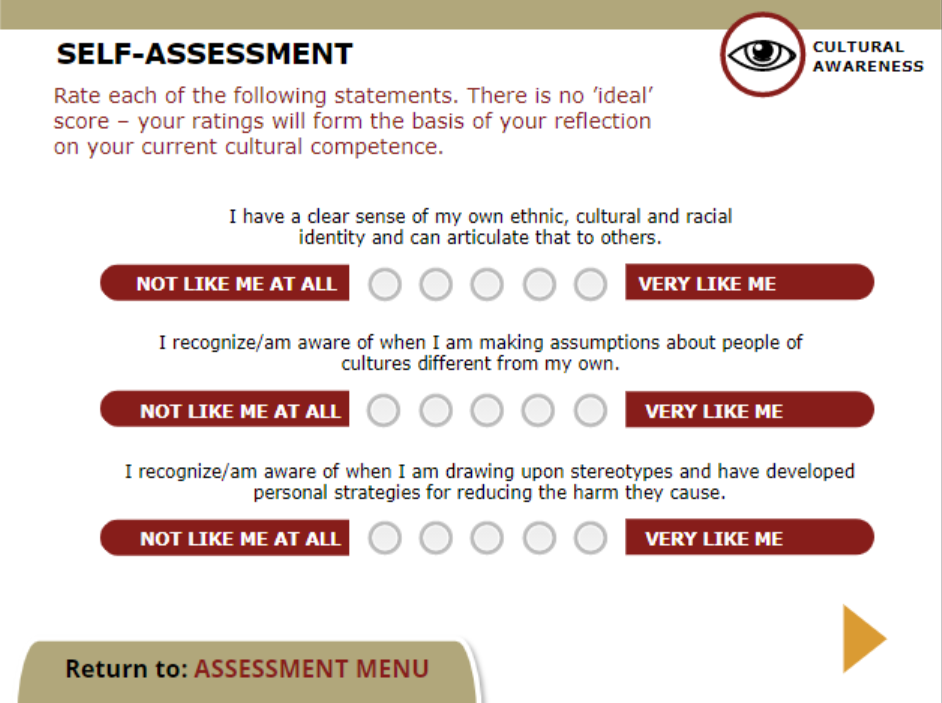
Cultural Competence Self-Assessment
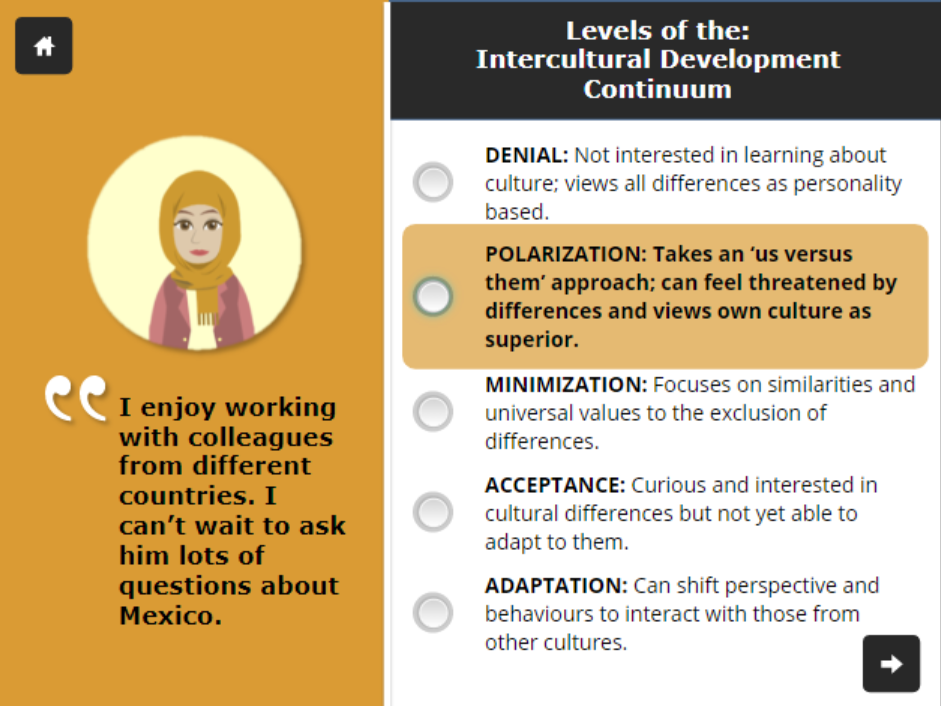
Intercultural Skills Knowledge Check
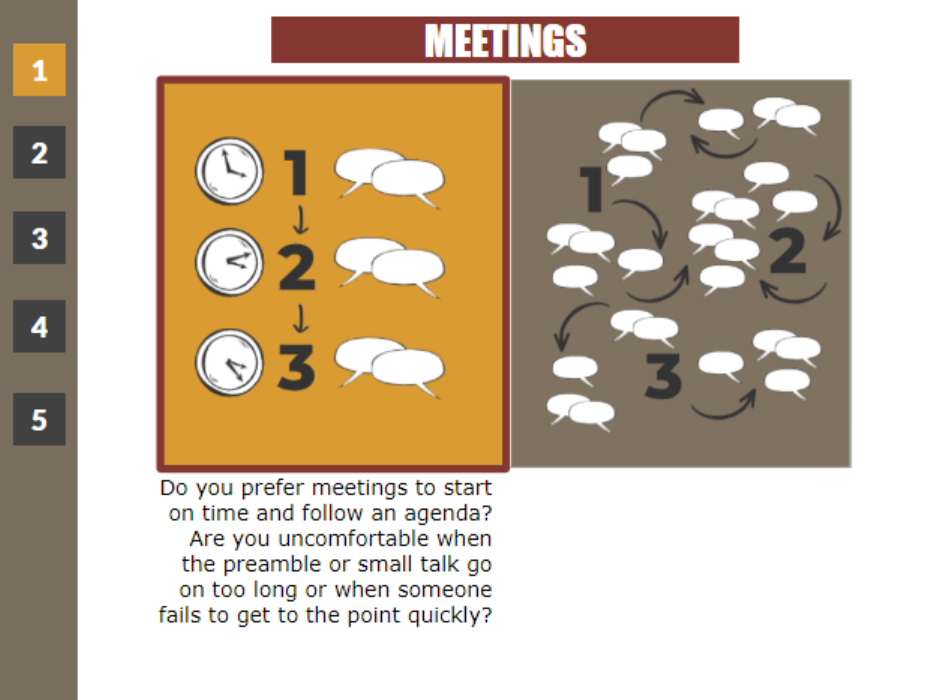
Intercultural Differences Activity
MINI-CASE STUDY
Turning “Wash Your Hands” into a Behavior-Driven Story
Actionable Insights
Not every problem can be solved by simply adding information. Sometimes the solutions involves removing a barrier instead. In this case, learners had the knowledge but they needed to unlearn the habits and excuses that were preventing them from applying that knowledge.
Year 2023
Industry Food Distribution
Audience Warehouse Employees
Components blueprint (doc); storyboard (PPT); 10 min eLearning module (Storyline)
Theme(s). behaviour change; removing barriers
Challenge
A food distribution centre asked me to create a handwashing training module. At first I had no idea how to teach a topic that, on the surface, seemed obvious. But the client was experiencing a real issue with staff not following seemingly straightforward hygiene standards.
Approach
I realized that neither procedural instruction (“how”) nor abstract rationale (“why”) was going to be enough to truly motivate behavior change.
Instead, I focused on what actually stops people from handwashing: rationalizations.
I created a scenario-based module where learners chose between doing the right thing or making excuses like “my hands aren’t that dirty” or “I’ll just be quick.” The impact of their choices was traced all the way to the customer experience, reinforcing both personal and organizational consequences.

AN UNUSED IDEA
One early concept I pitched featured a trio of animated germ characters who gleefully manipulated workers into skipping handwashing so they could reach the customer. The client loved it but ultimately chose a simpler approach because they were concerned that might be too much of a stretch for an audience who didn’t have a lot of exposure to eLearning.
MINI-CASE STUDY
Reviving a Talking Head Video into a Dynamic Overview
Actionable Insights
Constraints can sometimes be the catalyst for creative solutions. You might be surprised by an outcome that is better than what you could have come up with if you didn’t have those same constraints.
Year 2021
Industry Higher Education
Audience University Students
Components video (Adobe Premiere), animations (Vyond), audio (Audacity)
Theme(s) enhancing poor footage; limited resources
Challenge
An engineering faculty member wanted to welcome students to the co-op program with a video. The original version they sent me featured poor audio, a tiny talking head, and giant, clunky slides. I was asked to “spiff it up,” but due to COVID, we couldn’t reshoot in a studio.
Approach
It was hard to picture what could be done with such poor quality raw footage. But I was determined.
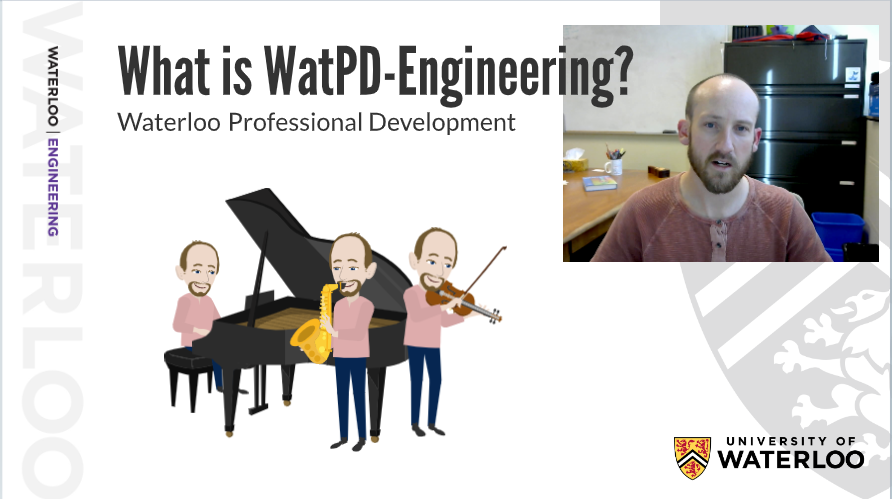
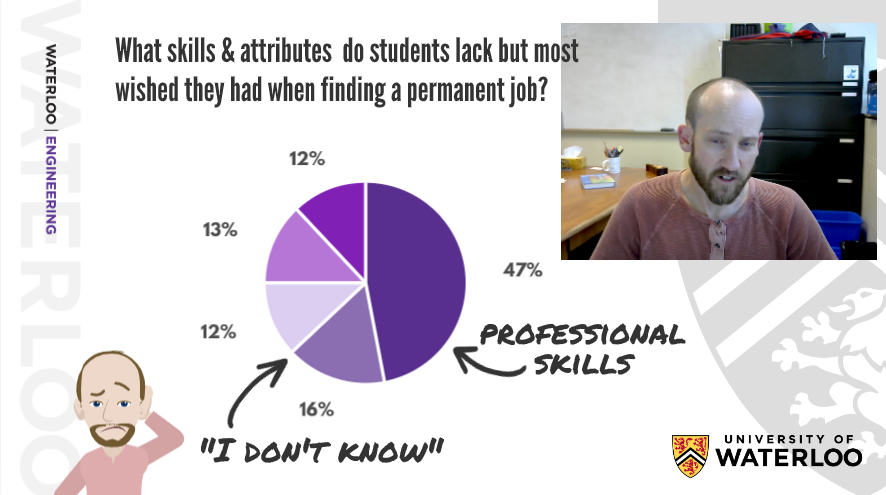
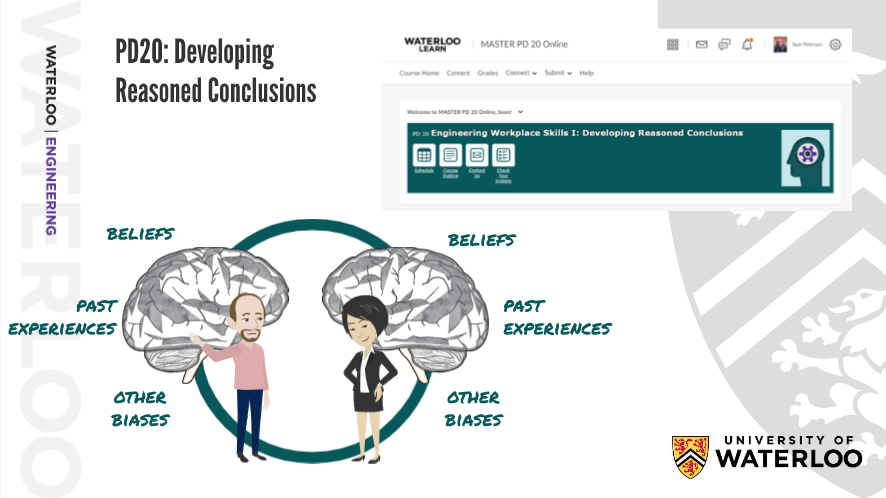
After taking stock of the tools at my disposal, I requested a webcam re-recording of just the speaker and separate versions of the slides. Then, I imported video and audio clips into Vyond. This let me mix and match visuals with cleaned-up audio and layer in animation, humor, and better pacing.
Result
The final product delivered the same message, but with far more visual energy, structure, and learner appeal. It showed that even limited raw materials can become something engaging with thoughtful treatment.